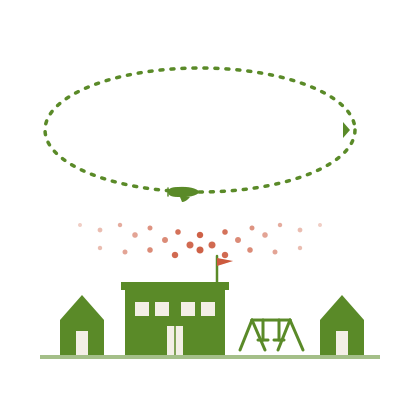
Most people are aware that leaded gasoline was a public health problem and that it was eliminated. What fewer people know is that the elimination was incomplete. Aviation gasoline — avgas — used in piston-engine aircraft still contains lead. Today, small aircraft are the largest remaining source of airborne lead emissions in the United States.
This is not a historical footnote. It is an ongoing exposure for every community near a general aviation airport where piston aircraft operate regularly.
What is 100LL?
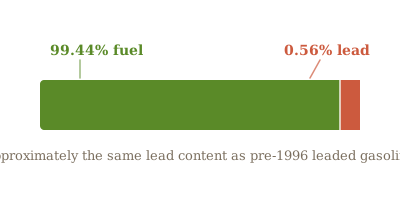
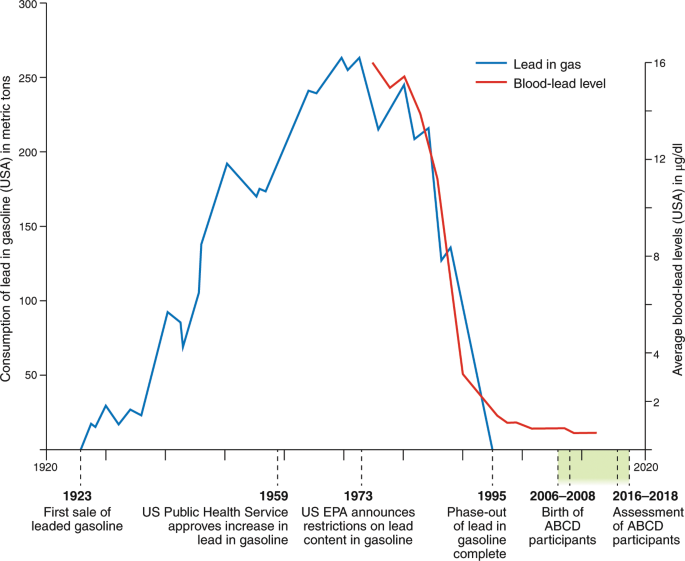
The fuel used in most piston aircraft is designated 100LL — 100 octane, low lead. The "low lead" designation is relative: 100LL contains approximately 0.56 grams of tetraethyl lead per liter. By comparison, the leaded gasoline that was phased out of automobiles in the United States by 1996 contained roughly the same amount.
Tetraethyl lead is added to avgas for the same reason it was added to car gasoline: it prevents engine knock in high-compression engines. The high-performance piston engines used in training aircraft — Cessna 172s, Piper Cherokees, and similar aircraft — require a minimum octane rating that currently only 100LL reliably provides.
Where the lead goes
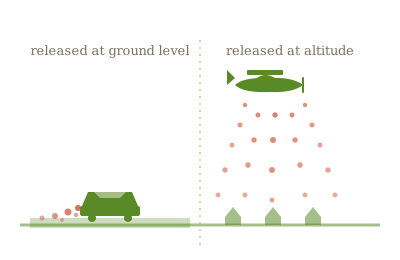
When a piston aircraft engine burns avgas, tetraethyl lead is combusted and expelled through the exhaust as inorganic lead particulates. These particles are deposited in the area beneath and downwind of the aircraft's flight path. Unlike automobile exhaust emissions (which are released at ground level along roads), aircraft exhaust is released at altitude and disperses over a larger area — including residential neighborhoods, school grounds, and parks beneath training circuits.
Studies using soil sampling around general aviation airports have found significantly elevated lead concentrations within approximately one mile of airport perimeters. A 2017 study published in PLOS ONE examined blood lead levels in children aged 1–5 living near general aviation airports and found a statistically significant association between airport proximity and elevated blood lead levels, after controlling for other sources of lead exposure.
"Living within 1 km of a [general aviation] airport was associated with 14.0% higher blood lead concentrations. The association was strongest for children aged 1 to 3 years."
— Zahran et al., PLOS ONE, 2017
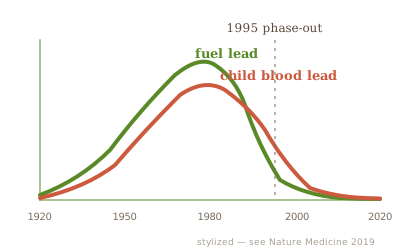
Children are the most vulnerable population. There is no established safe level of blood lead in children. Lead exposure affects neurological development, with documented effects on cognitive function, attention, and behavior. The effects are largely irreversible.
Why it hasn't been regulated
The Environmental Protection Agency has authority under the Clean Air Act to regulate lead as an air pollutant. It has exercised this authority extensively for automobile emissions. It has not done so for aviation gasoline.
In 2010, the EPA issued a finding that lead emissions from piston aircraft engines "may reasonably be anticipated to endanger public health or welfare." This finding triggered a regulatory obligation. As of this writing, a final rule has not been issued. The proceeding has been ongoing for over a decade.
Aviation gasoline is one of the last remaining uses of tetraethyl lead in any motor fuel in the United States.
The FAA's EAGLE (Eliminate Aviation Gasoline Lead Emissions) initiative aims to develop and approve an unleaded replacement by 2030. A candidate fuel, GAMI's G100UL, received a Supplemental Type Certificate from the FAA in 2022. Adoption has been slow and voluntary.
What this means for flight school neighborhoods
A single general aviation training flight burns approximately 10–12 gallons of avgas per hour. A flight school operating dozens of training sorties per day can burn hundreds of gallons. At 0.56 grams of lead per liter, this represents a significant and continuous introduction of lead into the local environment.
The pattern matters as much as the quantity. A single overpass of a training aircraft does not represent the same exposure as a flight school conducting circuits — repeatedly flying the same oval path over the same residential area, day after day. The cumulative deposition beneath a consistently-flown training circuit is meaningfully higher than background levels.
This is why the overfly lead exposure indicator is not simply an alarm for any piston aircraft. It is a continuous record of the pattern: which aircraft, at what altitude and proximity, over which address, how many times. The individual pass may be small. The cumulative record is not.
What you can do with this information
The EPA proceeding on aviation lead is still open. Public comment periods in regulatory proceedings accept individual submissions from affected residents. A documented record of piston aircraft activity over your address — exported from overfly in structured data format — is a substantive contribution to that proceeding, more credible than anecdotal testimony because it is attributable, timestamped, and tied to specific aircraft registrations and operators.
State environmental agencies in some states have begun independent investigations of airport lead deposition, separate from the federal proceeding. Local health departments can conduct soil sampling. School districts near airports can seek testing. Each of these processes benefits from documented records of who is flying over what area, how often, and at what altitude.
The lead problem is solvable. Unleaded avgas exists. The regulatory machinery, though slow, exists. What moves regulatory machinery is documented evidence of harm, submitted by real people at real addresses who can be verified. That is what overfly helps you build.
Sources
- Marshall, A.T., et al. (2019). "Association of lead-exposure risk and family income with childhood brain outcomes." Nature Medicine, 25, 1847–1853. ↓ Download PDF — ABCD study, 9,712 children aged 9–10; proximity to lead-risk census tracts associated with smaller cortical volume, smaller cortical surface area, and lower cognitive test scores.
- Cory-Slechta, D.A. (1996). "Legacy of lead exposure: Consequences for the central nervous system." Otolaryngology — Head and Neck Surgery, 114(2), 224–226. ↓ Download PDF — foundational paper on CNS effects at blood lead concentrations as low as 10–15 μg/dl.
- Graph source: Nature Medicine (2019). US lead in gasoline vs. blood-lead levels, 1920–2020. ↓ Download PDF
- Zahran, S., et al. (2017). "Linking Source and Effect: Resuspended Soil Lead, Air Lead, and Children's Blood Lead in Detroit, Michigan." PLOS ONE, 12(11). doi:10.1371/journal.pone.0186809
- EPA. (2010). Lead Emissions from the Use of Leaded Aviation Gasoline in the United States: Technical Support Document. EPA-420-R-08-020a.
- FAA EAGLE Initiative: faa.gov/aircraft/air_cert/design_approvals/piston/avgas
- CDC. (2023). Blood Lead Levels in Children. National Center for Environmental Health.